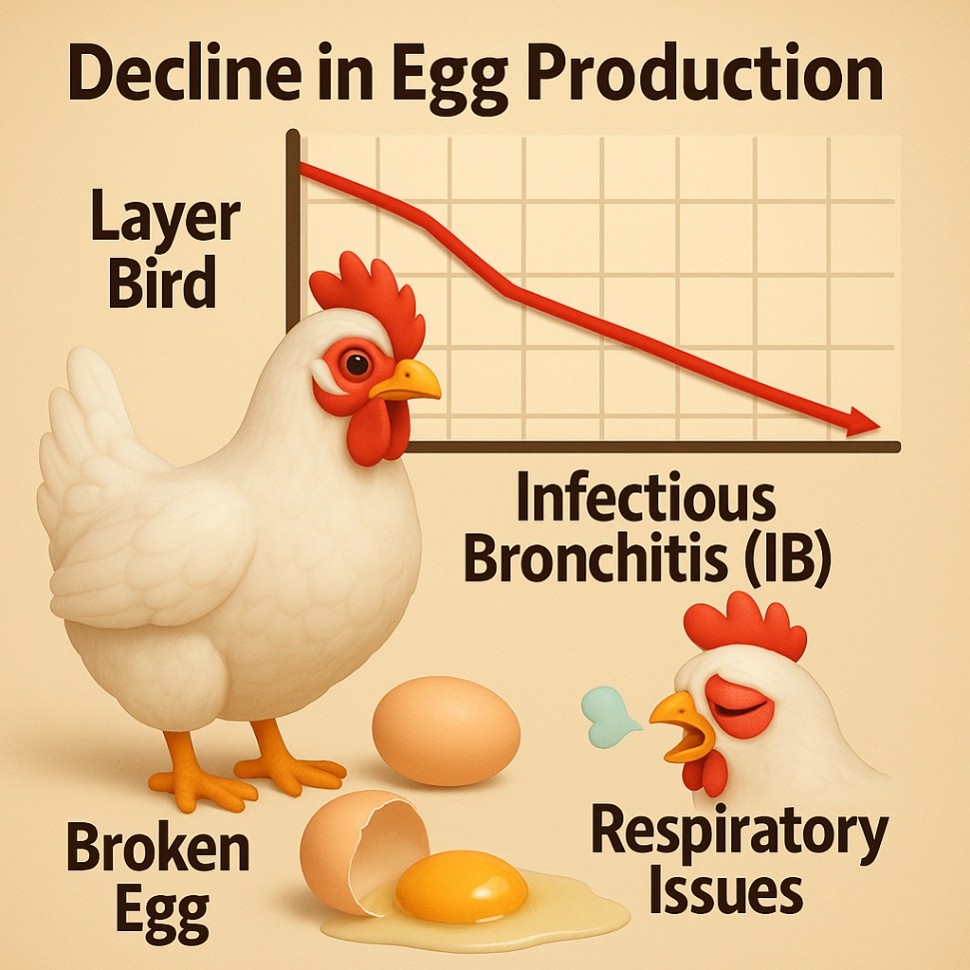
Damage during active laying
The virus replicates in oviduct epithelial cells, causing inflammation. This interferes with egg component formation — specifically, damage to the magnum reduces albumen protein, while damage to the shell gland affects calcium and membrane deposition, resulting in defective shells.
Production can drop as high as 70% during the acute phase, with some flocks recovering after 6–8 weeks, though permanent loss is possible.
Irreversible damage in young birds
Early infection can cause "irreversible developmental problems in the oviduct, such as cystic dilation or atrophy," potentially creating "false layers" that cannot properly form or lay eggs despite normal ovarian function.
Secondary contributing factors
Respiratory distress, kidney damage (in nephropathogenic strains), and increased susceptibility to secondary bacterial infections are identified as indirect production impacts.