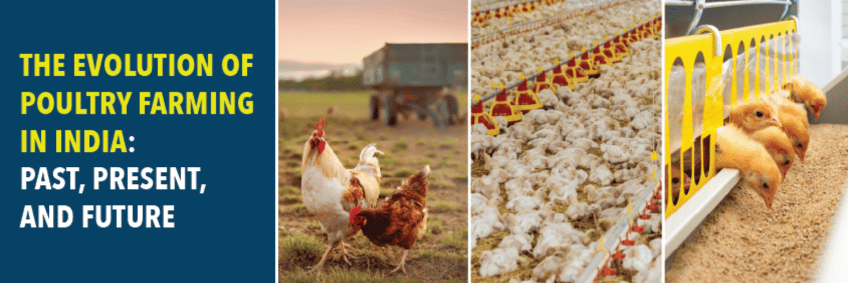
 HERO BANNER
Past: The Beginnings of Poultry Farming in India
Poultry farming in India has ancient roots, but it was initially practiced on a small scale. Rural households often raised chickens for personal consumption, with little focus on commercial production. The indigenous breeds used were well-suited to local conditions but lacked the high productivity of modern breeds.
In the early stages of poultry farming, several challenges were prevalent:
- Low Productivity: Indigenous breeds had lower egg production and growth rates compared to modern breeds.
- Health Issues: Limited access to veterinary care and hygiene practices led to frequent disease outbreaks.
- Infrastructure Limitations: There was minimal infrastructure for feed production, housing, and marketing.
Present: The Modern Era of Poultry Farming
The transformation of poultry farming began in the late 20th century, marked by significant technological advancements. Poultry farming has shifted from small-scale operations to large-scale commercial enterprises:
- Improved Breeds: Introduction of high-yield breeds such as broilers and layers, which offer better meat and egg production.
- Advanced Nutrition: Development of specialized feed formulas that enhance growth and productivity.
- Biosecurity Measures: Implementation of strict biosecurity protocols to prevent and manage diseases.
- Modern Housing: Adoption of modern poultry housing systems with controlled environments to optimize growth conditions.
- Integration: Rise of integrated poultry systems that manage production, processing, and marketing under one umbrella.
- Market Expansion: Increased availability of poultry products in urban and rural markets due to rising consumer demand.
- Export Potential: India has become a major exporter of poultry products, contributing significantly to the global market.
- Sustainability: Emphasis on sustainable practices to reduce environmental impact, including waste management and energy efficiency.
- Technology Integration: Use of digital tools for monitoring flock health, managing feed, and optimizing production processes.
- Consumer Awareness: Growing consumer focus on food safety and animal welfare, leading to higher industry standards.
Future: The Next Frontier of Poultry Farming
The future of poultry farming in India is poised for further innovation. Future developments in poultry farming will be influenced by government policies:
- Genetic Improvement: Ongoing research to develop breeds with better performance, disease resistance, and adaptability.
- Precision Farming: Adoption of precision farming techniques using data analytics and automation to enhance productivity and efficiency.
- Alternative Proteins: Exploration of alternative protein sources, such as plant-based and insect-based feeds, to address sustainability concerns.
- Supportive Policies: Introduction of policies that provide subsidies and incentives for modernizing poultry farms.
- Regulation: Strengthening of regulations to ensure food safety, animal welfare, and environmental protection.
- Disease Management: Focus on effective disease prevention and management, especially with emerging diseases.
- Resource Management: Efficient use of resources like water and feed to address the challenges posed by climate change and population growth.
How Poultry India Can Help
As the poultry industry in India evolves, Poultry India offers crucial support to navigate the modern challenges and seize opportunities:
- Knowledge Sharing: Provides insights into industry trends, technological advancements, and best practices.
- Networking Opportunities: Facilitates connections among industry stakeholders, including farmers, suppliers, and policymakers.
- Training and Education: Offers training programs and resources to enhance skills and knowledge in poultry farming.
Related: IPEMA's Role in Shaping the Sector · Transforming Poultry Farming with Technology · Opportunities in Developing Countries