 HERO BANNER
Farm Findings — Feather Sexing in Chicks
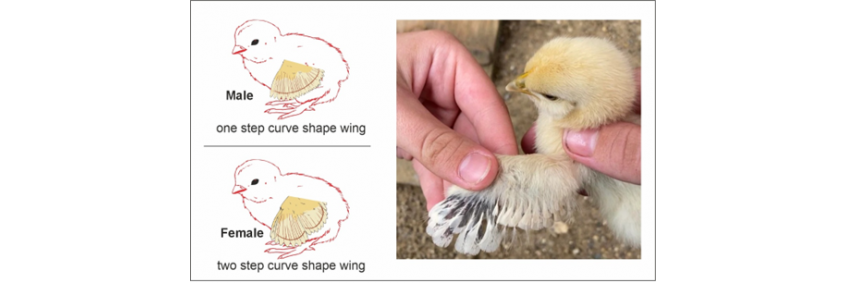
Feather sexing is an efficient and reliable method used to differentiate between male and female chicks within the first few days of hatching, typically between 2 to 7 days old. It can also be performed on day-old chicks with careful observation of their feather growth patterns. This technique is non-invasive, quick, and beneficial for poultry farmers who need to determine the sex of chicks at an early stage.
The method involves closely examining the development of the wing feathers. At this stage, both male and female chicks have growing feathers, but their feathering patterns show distinct differences:
Male Chicks
Male chicks tend to have shorter wing feathers. Upon close inspection, their feathers appear uniform in length, forming a single layer that is short and underdeveloped. This even feather length is a clear indication of a male chick, as males generally exhibit slower feather growth at this early stage.
Female Chicks
Female chicks, in contrast, have two visible layers of wing feathers. The top layer comprises shorter feathers, while the bottom layer consists of longer, more prominent feathers. This difference in feather length signifies faster feather development, a characteristic commonly observed in female chicks during their initial days.
Practical use in commercial poultry
This method is widely utilized in commercial poultry farming due to its quick and easy execution without requiring any specialized equipment. However, it is most effective in specific chicken breeds that have been selectively bred for this trait, including certain broilers, indigenous breeds, and layers. In other breeds, the feather growth differences between males and females may be less distinct, making sex determination more challenging.
Related: Role of the Gizzard in Layer Birds · Common Parasites & Harmful Effects · Vitamin D3 & TD Prevention